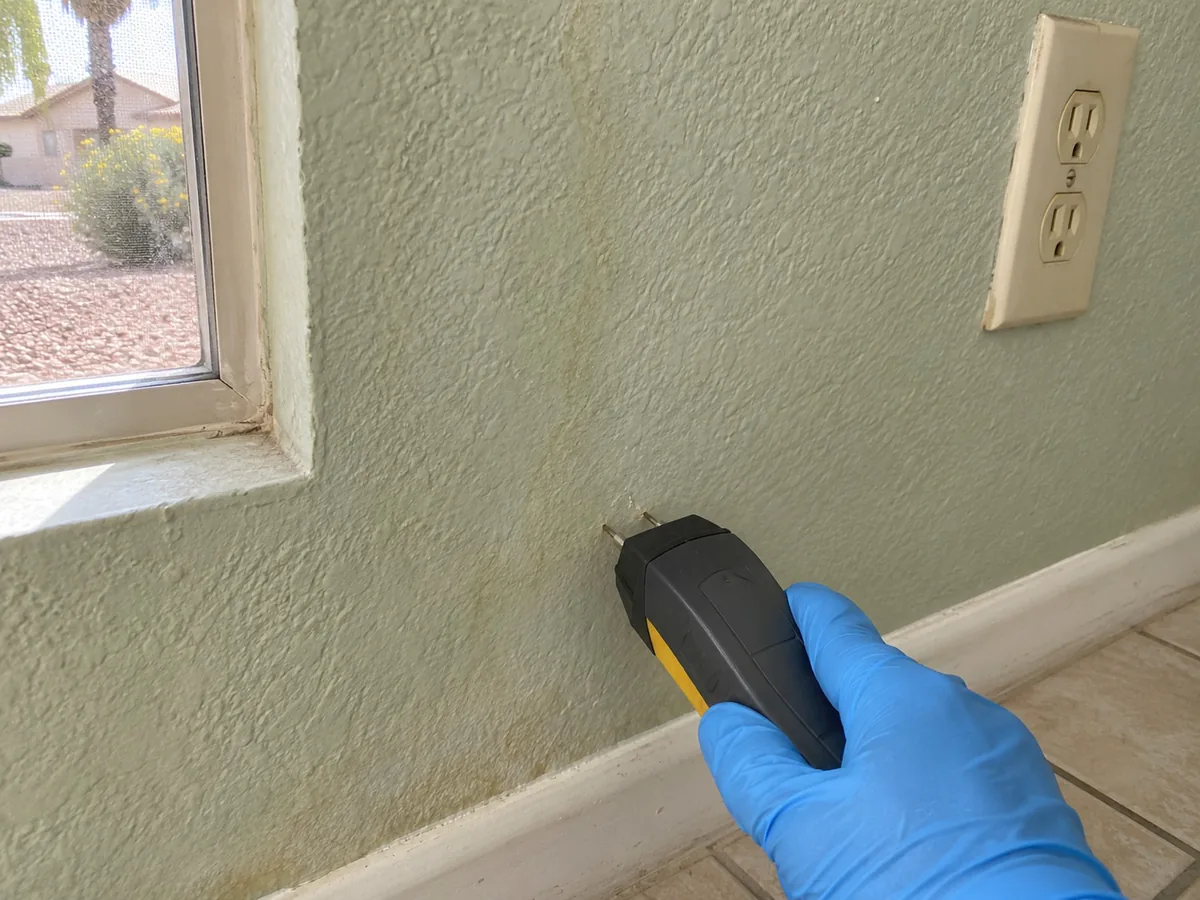
A moisture meter can help locate wet material, but a reading alone does not identify a failed pipe. Assessment combines the moisture pattern with visible conditions and the history of the event.
WHAT HAPPENS NEXT
What an assessment should consider
- 01
Discuss when the stain or odor first appeared.
- 02
Compare suspect surfaces with an appropriate dry reference.
- 03
Trace adjoining walls, rooms, and floor transitions.
- 04
Identify where a plumber or other specialist should investigate next.
Discuss the scope before work begins
Share the discovery time, whether the source is controlled, and the rooms or materials involved. Mention any previous repairs and any known contamination. Work depends on actual conditions and access.
Ask which materials may need removal, how the area will be protected, and what information will be recorded. Repair of the original plumbing, roofing, HVAC, or drainage fault may require another professional.
Moisture assessment narrows the investigation
A moisture survey helps identify suspect building materials and the pattern around them. It is not the same as locating every concealed pipe fault. A wet patch may be fed by plumbing, an exterior opening, condensation, or water traveling from another part of the building. The history matters alongside the readings.
Tell us when the mark or odor first appeared and whether it changes with rainfall, fixture use, heating, or equipment operation. If a meter or utility bill has shown unusual water use, keep that information separate from assumptions about the leak location. Several clues may point toward further investigation without proving the failed component.
Different instruments answer different questions
A pinless moisture meter can help survey an area without making the same type of contact as a penetrating test. A pin reading checks a specific location and needs interpretation for the material involved. Settings, construction, and nearby components can affect what a reading means. Ask for an explanation rather than relying on a color or alarm alone.
An infrared image shows surface temperature differences. It can help identify an area worth checking, but a temperature pattern is not direct proof of water. A useful investigation follows a clue with an appropriate material check and considers other reasons for the temperature change. The tools support a diagnosis; they do not replace one.
Follow the pattern across a building boundary
The survey should not stop at the center of the visible stain. Compare the surrounding area, adjacent room, wall base, and other accessible surfaces that share the suspected route. A dry reference made of a different material may be misleading, so comparisons should be chosen and described carefully.
In a multi-level property, the ceiling below and the room above may both matter. In a shared building, coordinate with management before assuming access to another unit. Record which locations were inspected and which could not be reached. That boundary helps the next trade understand the remaining uncertainty.
When opening a finish becomes necessary
Some conditions cannot be confirmed from the room side of a wall or floor. If selective opening is proposed, ask what question it is intended to answer and what damage the access will create. There should be a practical reason to open a location, such as checking a suspect cavity or following a documented water route.
Agree on authorization and the repair responsibility before destructive investigation begins. A plumber may then need to locate and repair a line, or a roofer may investigate an exterior opening. Keep the moisture survey with the source repair record so the drying scope can be based on both the identified cause and the affected materials.
What the inspection needs to resolve
| Observed condition | Why it matters | Useful next step |
|---|---|---|
| Meter indicates a suspect area | Material and instrument setting affect interpretation | Compare suitable reference locations |
| Thermal image shows a cool patch | Temperature difference is not proof of water | Confirm with an appropriate material check |
| The route disappears behind a finish | Concealed access may be necessary | Agree on the purpose and repair responsibility |
Planning the work in an occupied home
Tell the restoration provider which rooms are occupied, how people normally move through the house, and whether an adjoining unit or shared corridor is involved. Equipment needs safe electrical access and clear paths. Discuss where hoses and cords will run before they cross a doorway or the route to a bathroom.
Ask which spaces can remain in use and what happens to belongings in the work area. Moving a wet item into a clean bedroom can transfer moisture or contamination. Valuable furniture, electronics, papers, and specialty finishes may need separate advice. Record their condition before movement where that can be done without entering a hazardous area.
If equipment is left running, get instructions on what to leave in place, who to call if a unit stops, and when the next inspection is expected. Do not move a dehumidifier or redirect airflow simply because the surface feels dry. Discuss noise, access times, and any need to keep a room isolated at the start of the job.
What changes between cleanup and repair
- Control the sourceRepair the leak or address the entry route. Confirm the area is safe.
- Remove and cleanExtract accessible water and determine which materials can remain.
- Dry and measureTrack the affected assembly, not just room humidity.
- Prepare for repairReview remaining moisture, damage, access, and finish requirements.
These stages can overlap. A plumber may repair a supply line while a separate restoration scope addresses wet flooring. Rebuilding should follow the condition of the materials rather than a date chosen before the damage was inspected.
USEFUL ANSWERS
Before you make the call
Can you locate a leak without opening any wall?
Some clues can be gathered without opening finishes, but concealed conditions may need further access. Discuss the scope and limitations before any destructive investigation.
Is moisture assessment available outside Mercer Island?
We also cover Bellevue, Seattle, Medina, Newcastle, and Clyde Hill. Call with the property city, affected rooms, and access requirements to discuss an assessment.
What should I tell the moisture assessment help line?
An unexplained damp patch or recurring stain? Tell us when it appears and whether it changes with rain or fixture use.
What affects the scope of moisture assessment?
The water source, duration, affected materials, contamination, and access all matter. Discuss the proposed work and any separate source repair before authorizing the scope.
Can I call about moisture assessment after office hours?
Emergency service is available 24 hours at (564) 777-0869. Office hours are Monday through Friday, 8:00 AM to 7:00 PM. Call directly to discuss the current situation and availability.